| Type | Mineral |
| Geological Age | Unrecorded |
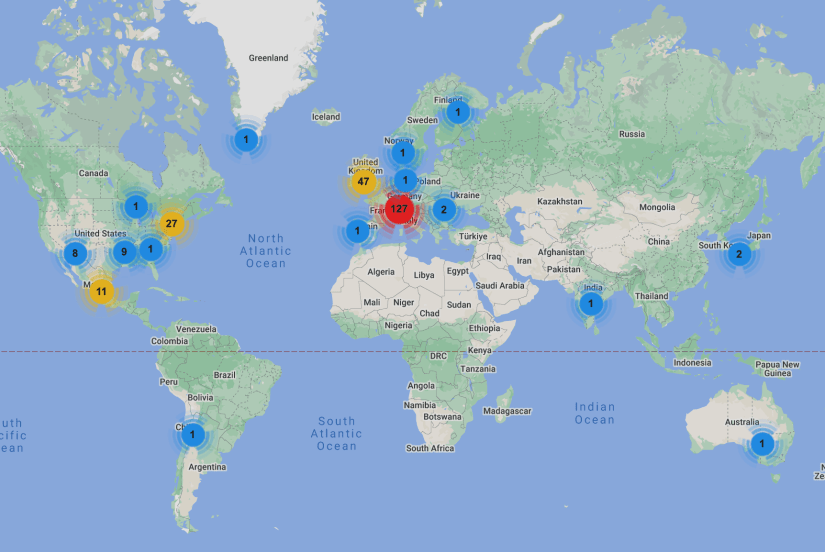
| Location | Global (incl. Switzerland, Mexico, USA, Canada, UK…) |
| Donation Date | 1933 |
| Specimen Records | https://arctos.database.museum/search.cfm?guid_prefix=TCDGM%3AMineral&accn_number=2023-01 |
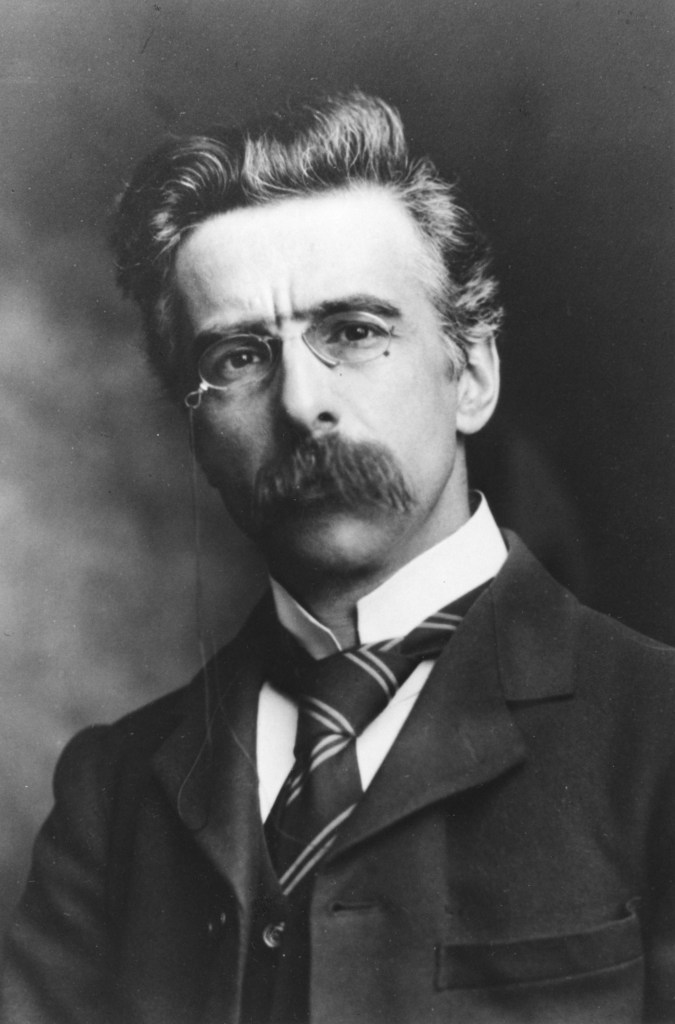
The John Joly Mineral Collection comprises a small range of mineral species: quartz, garnet, epidote, sphene, zircon, tourmaline, rutile, and beryl being those best represented, as well as some rarities. Accompanying the collection is a hand-written catalogue (in Joly’s hand) which gives the place and date of purchase as well as the price paid for each specimen.
Joly acquired specimens from several sources; some were gifts from his mother who gave him some Tourmaline crystals, and from colleagues in Dublin. Entries 113 and 114 are listed as Iceland Spar, were given by Mr Yeates, a well-known Dublin manufacturer of optical instruments. The bulk of the specimens were purchased in 1887, 1888 and 1892 while travelling in the Alps, and in 1887 from A.E. Foote, the American mineral dealer, who sold Joly a large number of North American minerals, including the fluorescent Franklinite and Autunite.
The collection contains few Irish specimens. Represented are some zeolite minerals from the Giant’s Causeway, and some beryl crystals from the granite of the Dublin Mountains, where Joly liked to walk and relax.
The collection was housed in a purpose build cabinet, which Joly kept at home. It was a personal collection and not used in research. The specimens were bought on account of their beauty and the excellence of their crystals.
On his death in 1933 the collection and cabinet were bequeathed to the College and were placed in the Geological Museum. Subsequently the specimens were removed and dispersed within the general mineralogical holdings, while the cabinet was used by a staff member for general storage. In 1989 the cabinet was recovered and the collection has been restored to its original state.
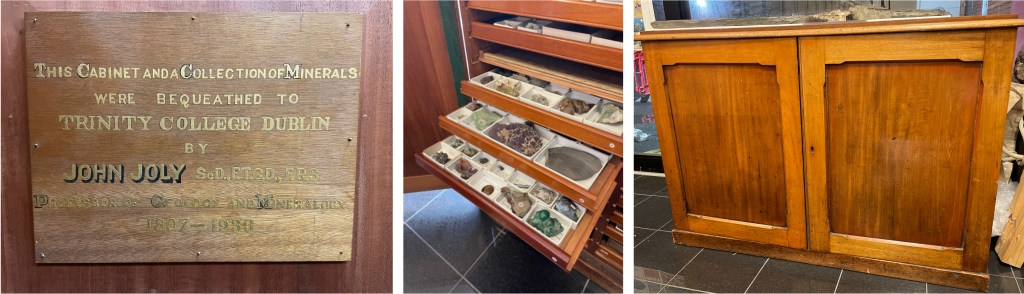
The collection is not the result of any great development in mineralogy in Ireland or elsewhere, rather it is simply interesting in that it belonged to one of Ireland’s most talented and versatile scientists – therein lies its importance.
– Patrick N. Wyse Jackson, 2023
Collection Documents
John Joly’s mineral catalogue of 282 specimens is handwritten in a blue copybook. TCD catalogue numbers have been added (handwritten in blue ink) at a later date, but not for all specimens. Additional links to TCD M-numbers have been made since, but some specimens have yet to be found in the collection. Note that the last page of this catalogue appears to be written in a different hand.
Joly Label Styles
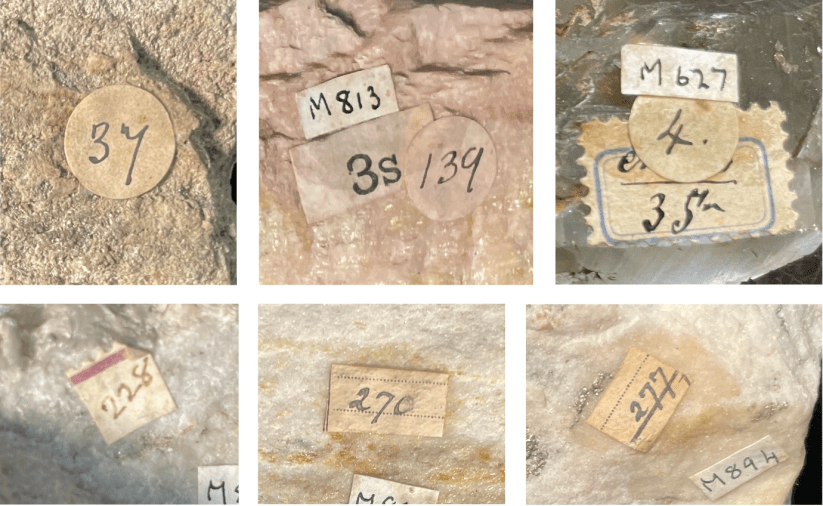
Joly catalogue numbers, which correspond to the catalogue above, come in two main styles – round stickers with larger numbers and a smaller rectangular type. All are handwritten in brown or black ink.
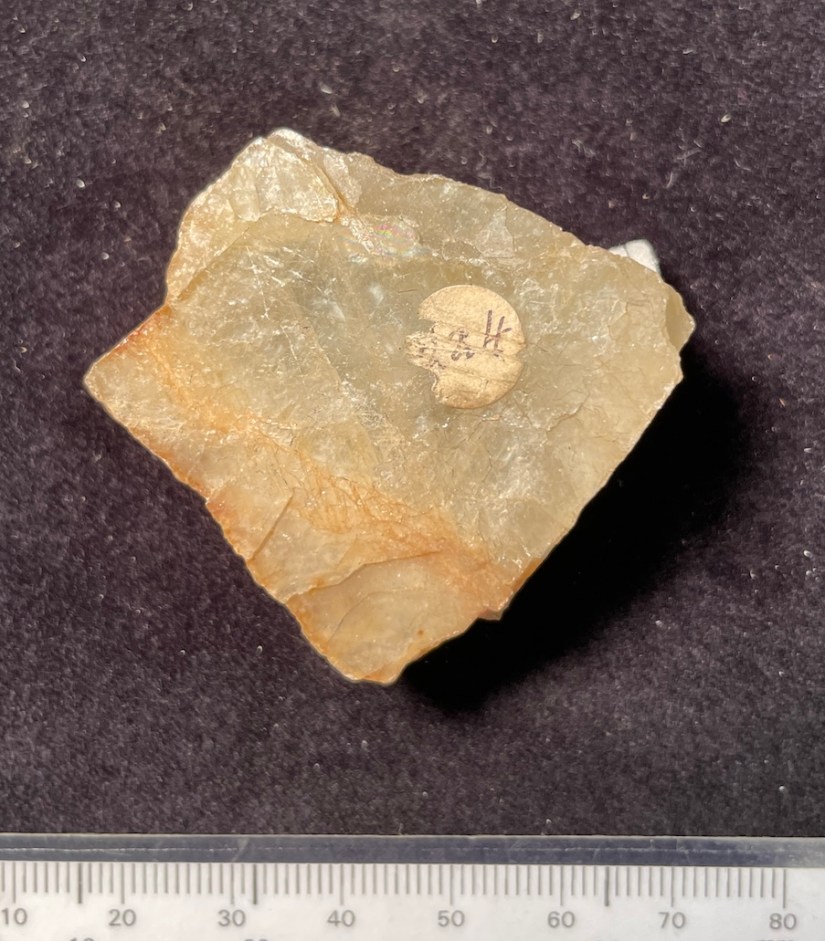
Note there are specimens with round handwritten labels which appear to be in John Joly’s hand, but don’t match the Joly catalogue. For example, the specimen on the left below (M1027) has 224 written in small handwriting, and the specimen type matches the Joly Mineral Catalogue (Smoky Quartz), whereas the specimen on the right has round label 224 in the Joly style but does not match the catalogue.

Mystery Specimens
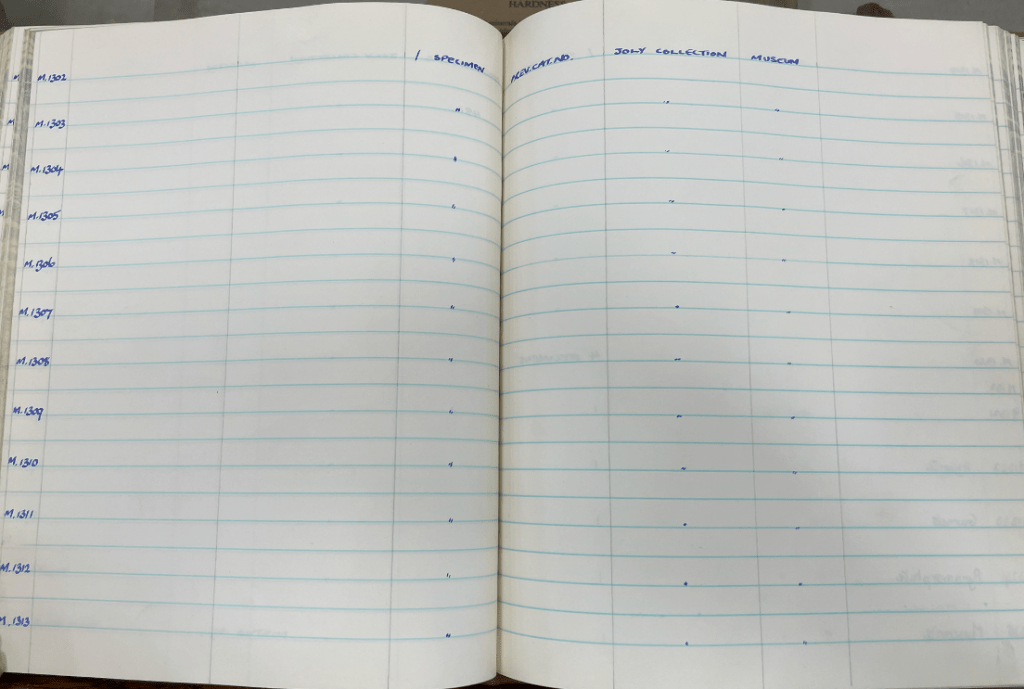
While the handwritten Joly catalogue has 282 minerals listed, the TCD catalogue book has 842 specimens listed under “Joly Collection”. Many of these specimens have no associated information – the labels and the catalogue are blank, and there are no other identifiers attached to the specimen. It seems likely that they may have been part of the original collection (there appears to be enough space in the cabinet), but for some reason Joly only made a catalogue for a subset. We continue to look for additional documentation that could shed light on how the collection was accessioned. In the meantime, unidentified minerals have been entered into the database as “Mineral”, some with attached images. Seventeen have some information about locality.
Albert E. Foote Specimens
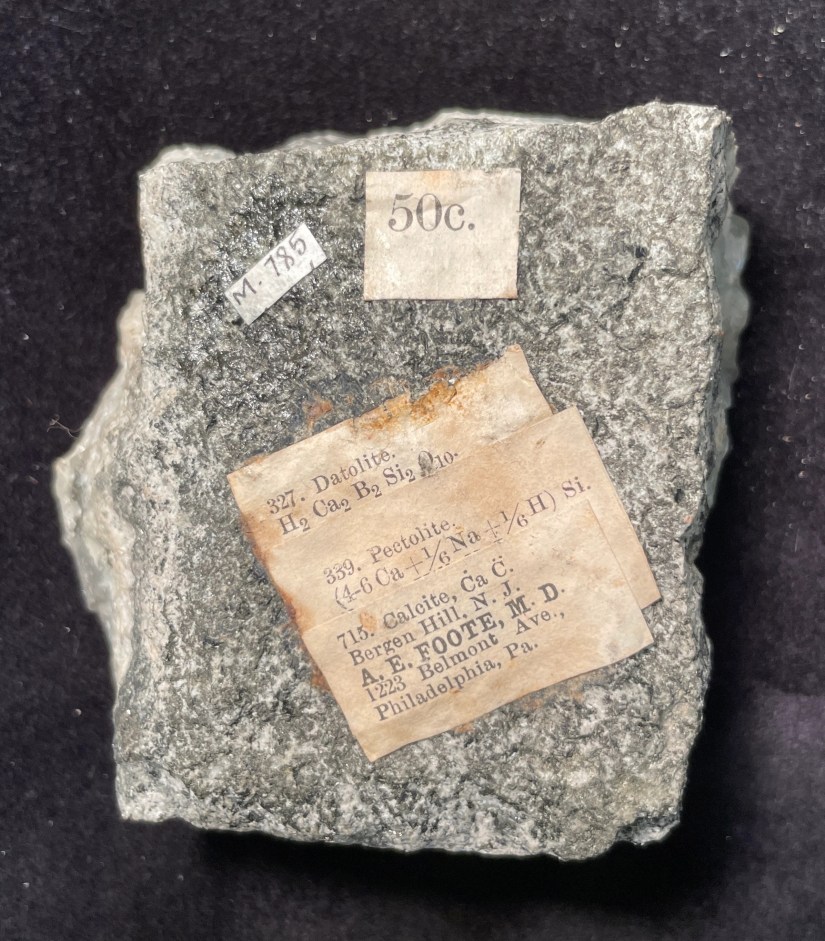
Seventy-two databased Joly specimens were bought from A. E. Foote, most in 1887. The majority were from North America – exact counts as follows:
44 United States
9 Mexico
8 Canada
4 United Kingdom
1 Brazil
1 Italy
1 Japan
1 Norway
1 Sri Lanka
1 Switzerland
1 Unknown
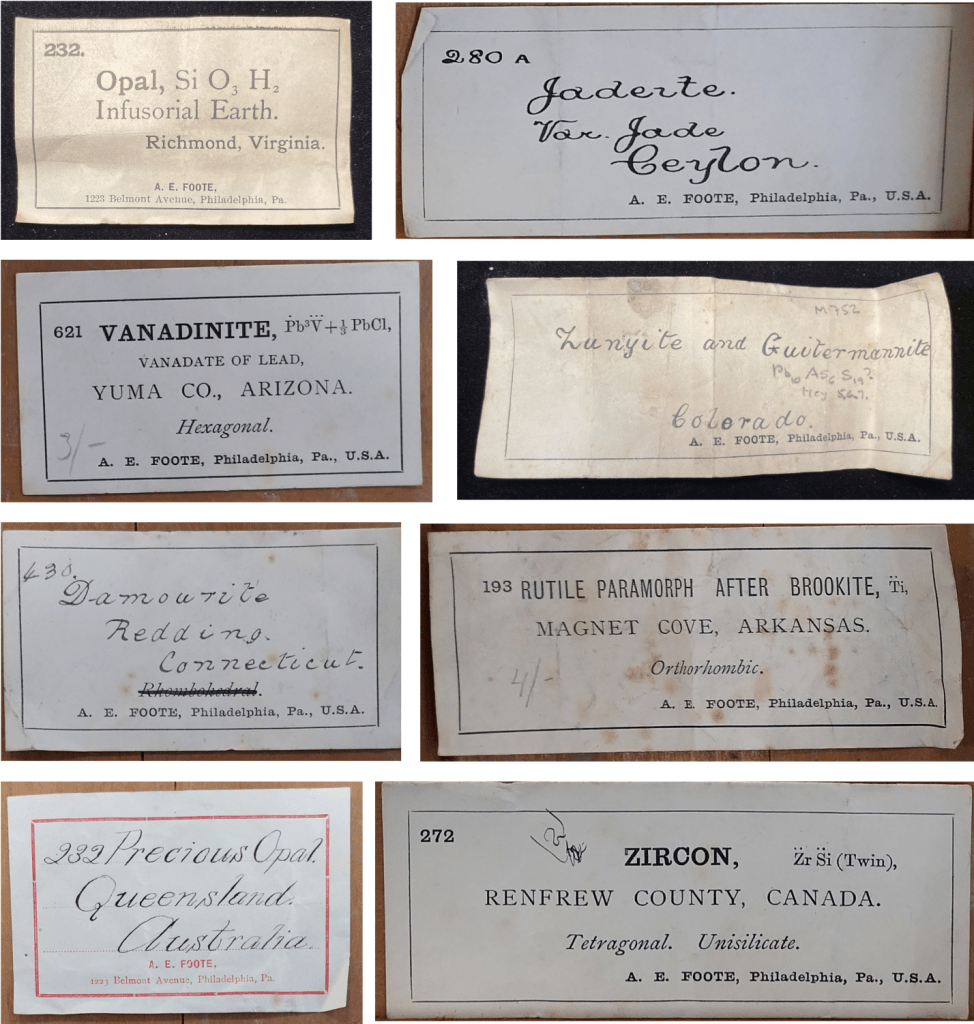
Many of the specimens have Foote labels stuck directly onto them, which include Foote catalogue numbers, identification(s), and some locality information. Many also have a price stuck to the specimen. Note that the Foote catalogue numbers relate to the mineral type, they are not unique to the specimen.
Paper labels for the Foote specimens came in a variety of shapes and styles as illustrated below. In many cases the Foote labels have been separated from the specimens.
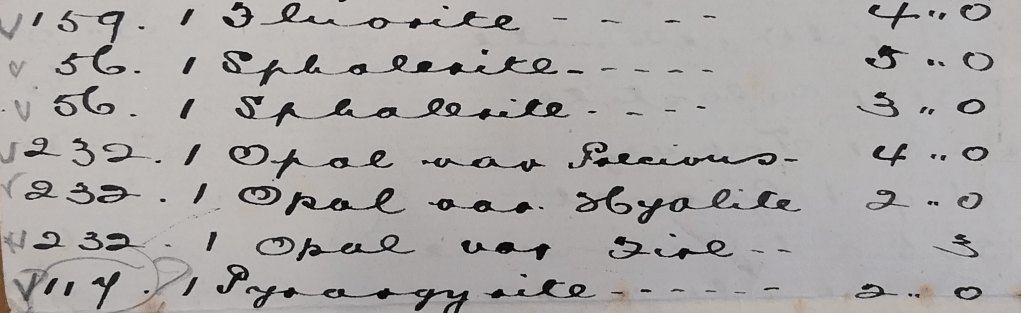
A handwritten document with the collection lists a) Foote numbers b) number of specimens c) mineral name and d) price in £-s-d, for the specimens that Joly bought. A Foote catalogue in the collection, attached in full below, was published by 1897, ten years after Joly’s purchases, but nevertheless giving a valuable insight into the kinds of minerals available and their provenance.
Samuel Henson Specimens
Eighteen of the databased specimens come from Samuel Henson, a mineral dealer from London.
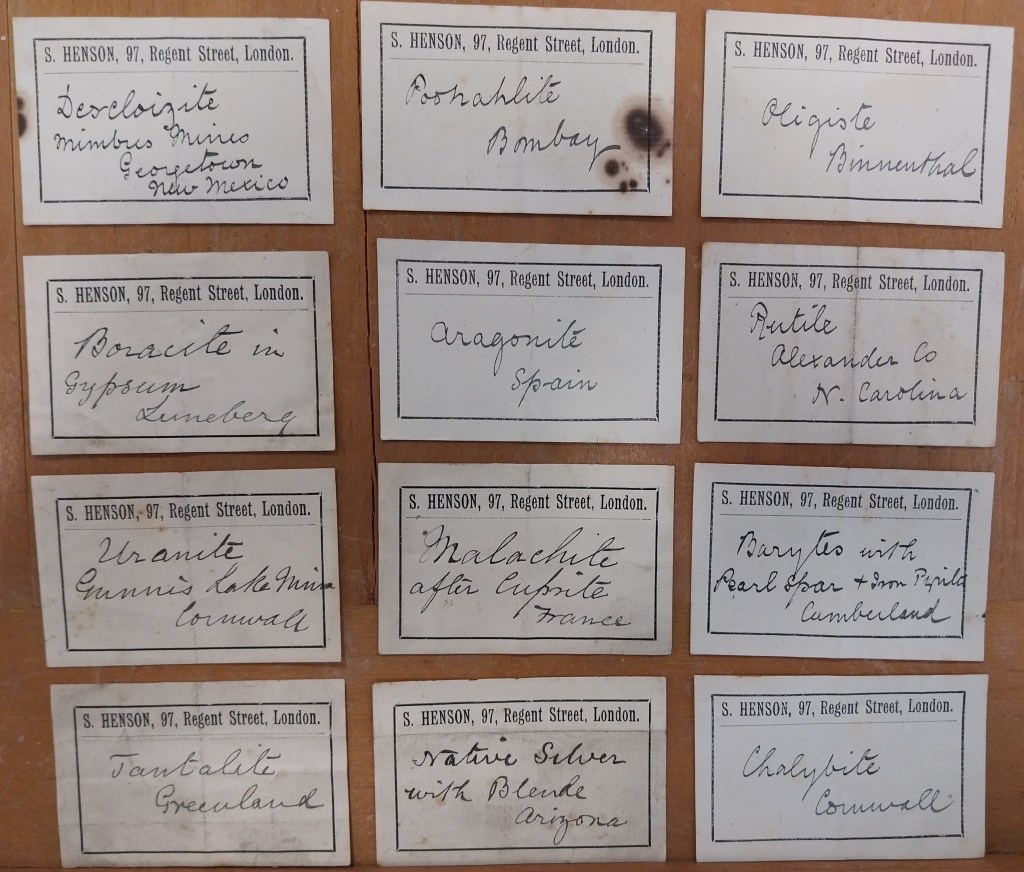
Many of the Samuel Henson specimens came to Joly through his friend and colleague Kinsley Dryden Doyle (1864-1928), who attended the Rathmines School with Joly, completed at B.A. in engineering at Trinity, and later went on to become an officer of the Royal Naval Air Service.
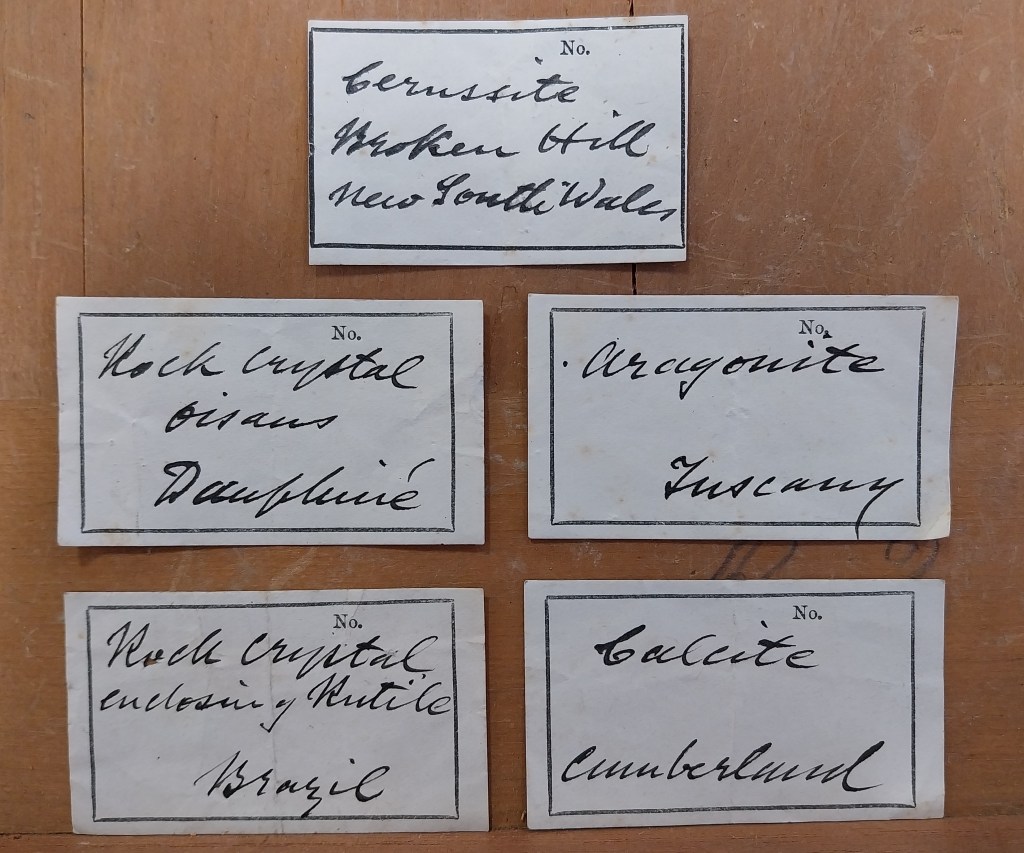
The Swiss Specimens

One hundred and twenty-two specimens in the collection were purchased by Joly in the Swiss alps. It is not always clear whether the locations listed in Joly’s catalogue are the place of collection or the place of purchase, although in some cases a distinction is clearly made. The most common places listed are Zermatt, Andermatt, St. Gotthard and Binn (or Binnetal/Binnenthal). Some minerals were purchased at the “Devil’s Bridge” or Teufelsbrücke in the St. Gotthard pass, between Andermatt and Göschenen.
This guide in the collection is by Léon Desbuissons, a French artist and geographer/geologist. It was published in 1906, a few years after Joly visited the area, and provides a list of minerals from the Binn Valley (Binnenthal), accompanied by a detailed map of localities (click image to download in full).
Miscellanea
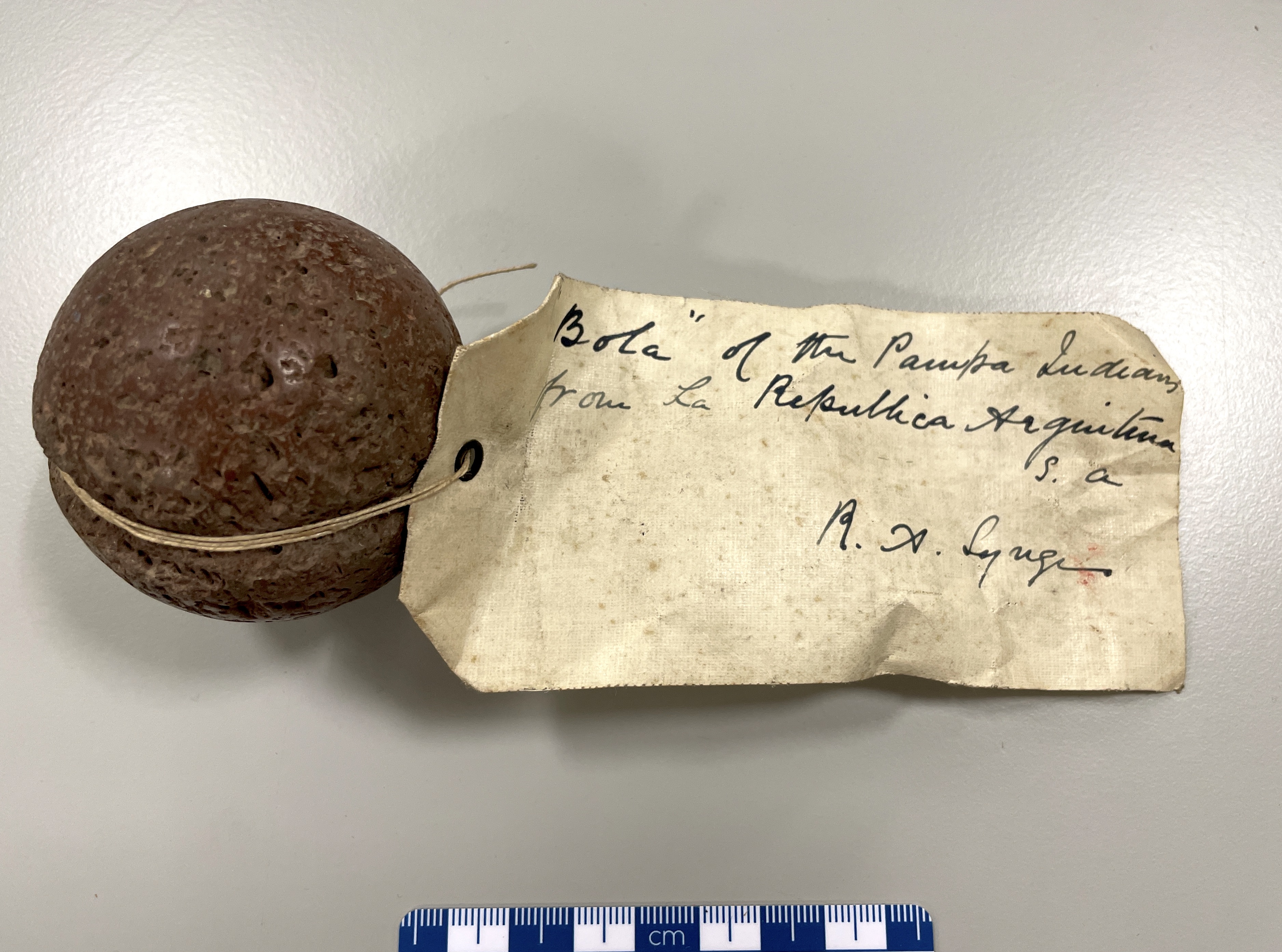
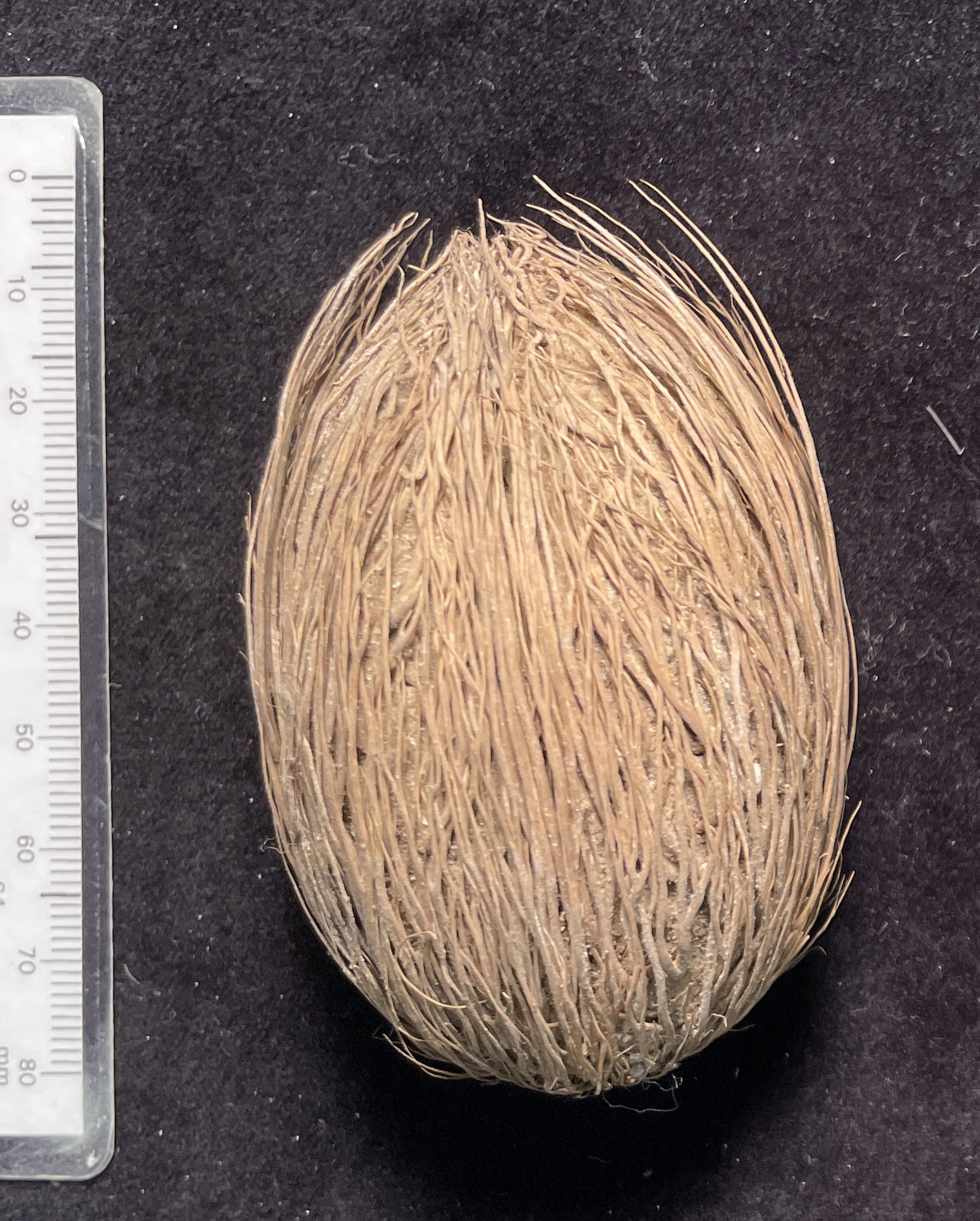
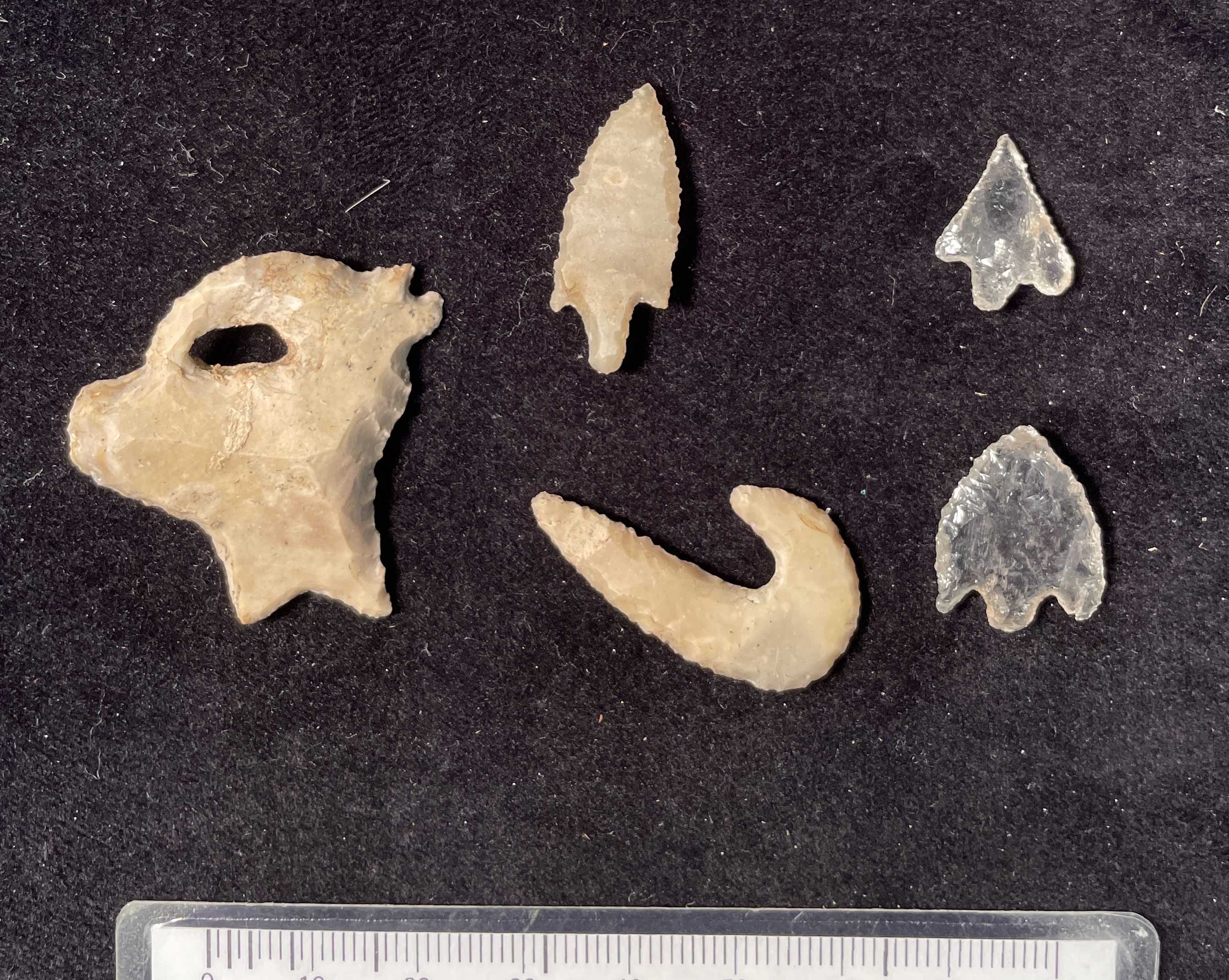
In addition to minerals, there are a number of miscellaneous artefacts included with the Joly collection. Some are illustrated below – most have no accompanying information.

Full Documents
- Joly catalogue/notebook, from 1886, which relates to Beryl specimens from Glencullen, Bray Head Slates (+ Oldhamia and ‘new fossils’), Apatite from Glencree, and Pumice and Dust from Krakatoa.
- Joly Catalogue Cards
- Joly-Foote Sale Listing
- Foote Mineral Catalogue 1897
See also a drawer of samples which includes material from the H.M.S. Challenger and other 19th century scientific expeditions.
 Geological Museum - Trinity College Dublin