| Type | Fossil |
| Geological Age | Silurian |
| Location | Dingle Peninsula, Co. Kerry, Ireland |
| Donation Date | 1960s-1980s |
| Specimen Records | https://arctos.database.museum/search.cfm?guid_prefix=TCDGM%3APaleo&accn_number=2023-02 |
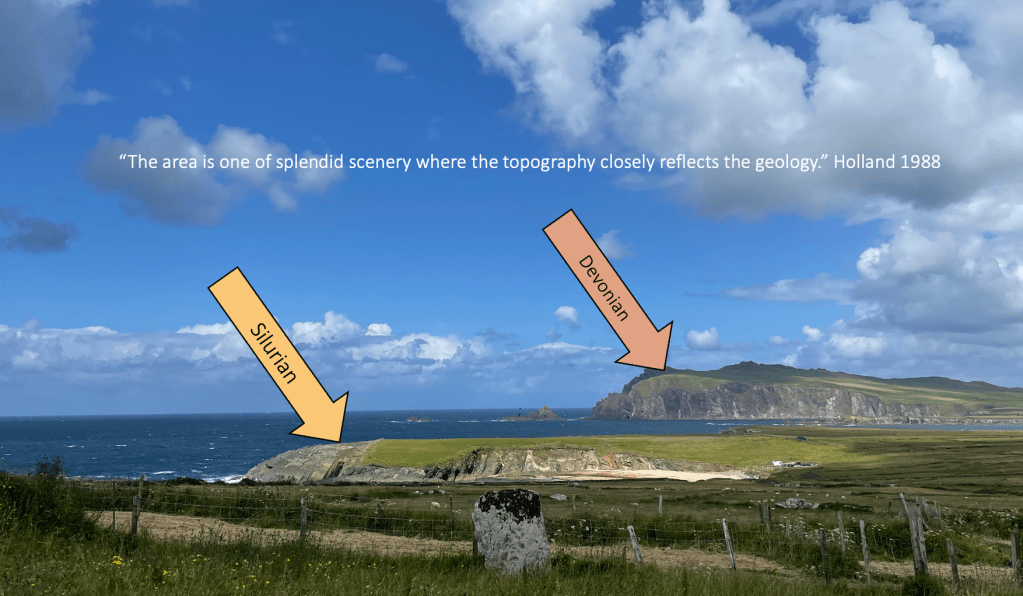
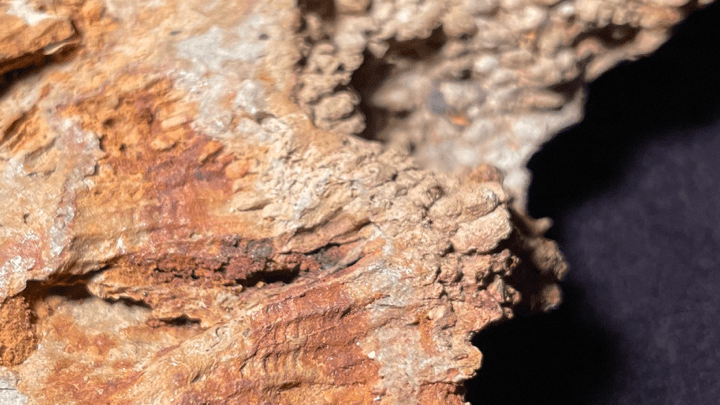
This collection of 279 specimens primarily consists of invertebrate and trace fossils collected by Charles Hepworth Holland from the Silurian of the Dingle Peninsula, collected from the 1960s to the 1980s. The collection is the basis of the faunal list published in Holland, 1998, The fossiliferous Silurian rocks of the Dunquin inlier, Dingle Peninsula, County Kerry, Ireland. Transactions of the Royal Society of Edinburgh: Earth Sciences, 79, 347-360 (attached below).
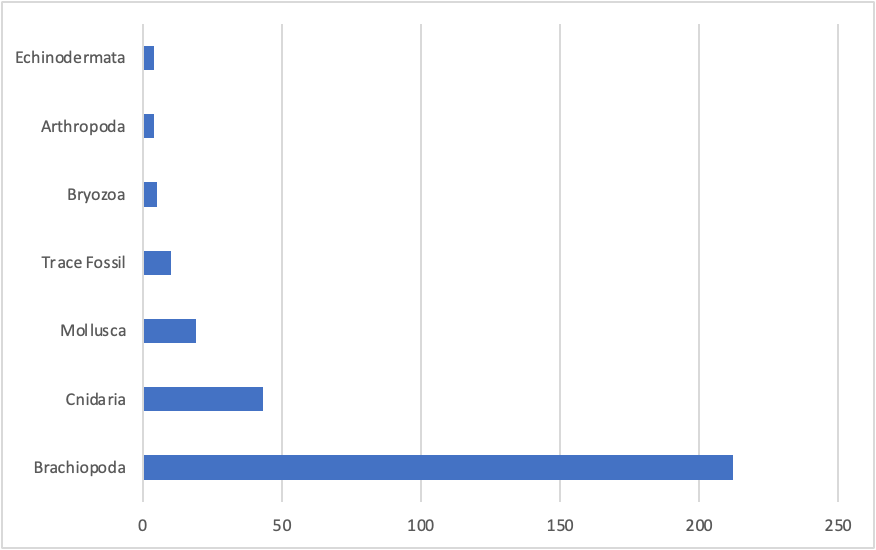
The original faunal list is transcribed below. The description from Holland, 1988 is as follows: “A reference collection upon which identifications listed here are based is housed in the Geological Museum, Trinity College Dublin with specimen numbers TCD 30138-30337. Most of the material used in the descriptions of Holcospirifer bigugosus and Rhipidium hibernicum is also held at Trinity College Dublin, but there are a few specimens in the collections of the National Museum of Ireland and the British Museum (Natural History). Details are given in Bassett et al. (1976). Key: vr = very rare, c = common, r = rare, vc = very common.”
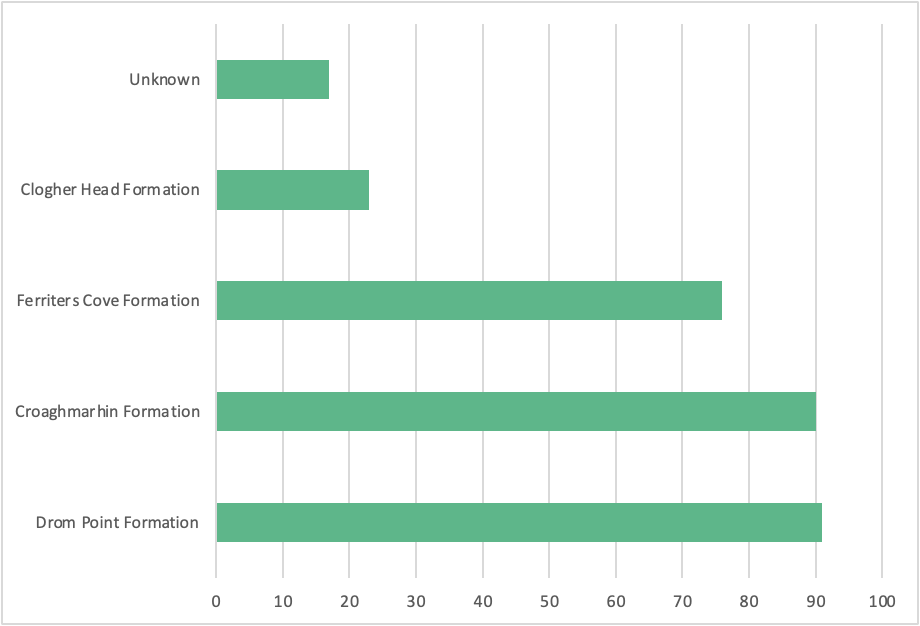
The databased collection also includes:
- The related type specimens from Bassett et al. 1976 (paper attached below), where the brachiopod Rhipidium hibernicum was described. https://arctos.database.museum/search.cfm?guid_prefix=TCDGM%3APaleo&identified_agent=Michael%20G.%20Bassett&coll_role=collector&any_geog=Kerry
- Specimens apparently collected at an earlier date which are related to specimens held at Geological Survey Ireland (databased catalogue numbers in the range of 15174-15212). GSI numbers are recorded as identifiers in the database, and the Geological Survey Ireland is listed as a collector https://arctos.database.museum/search.cfm?guid_prefix=TCDGM%3APaleo&coll_role=collector&collector=Geological%20Survey%20Ireland&any_geog=Kerry
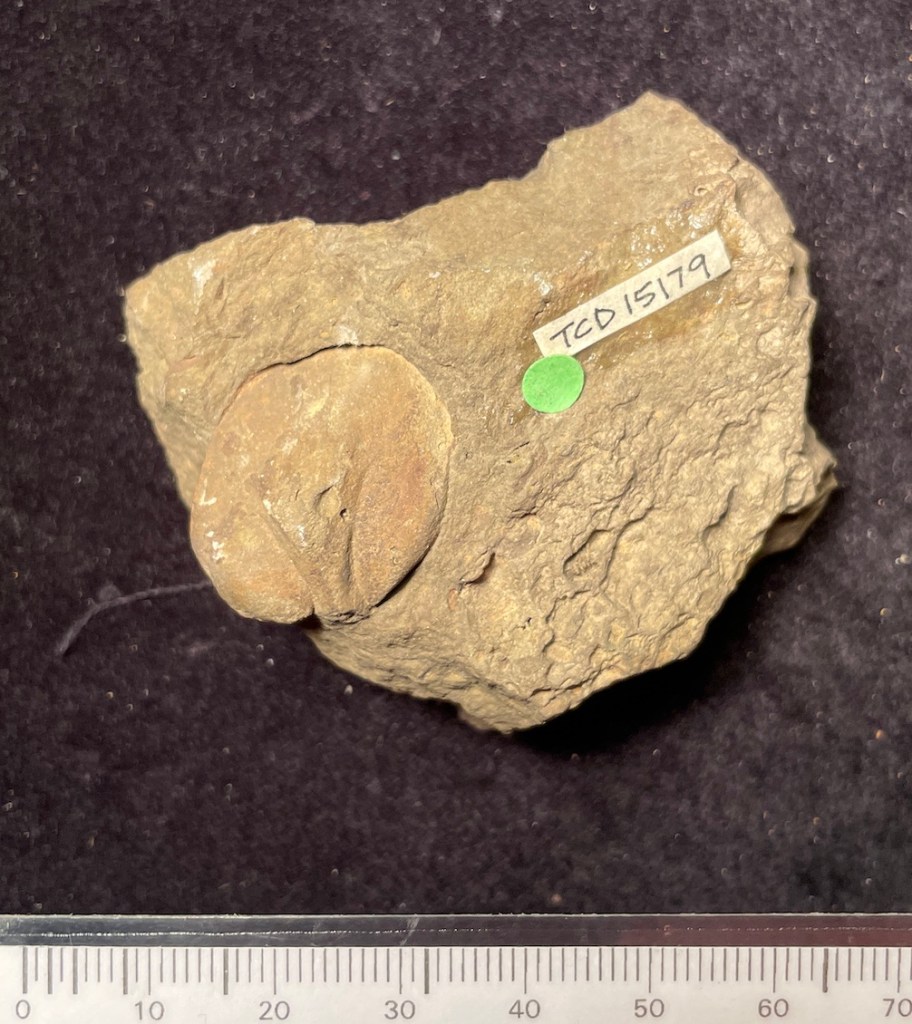
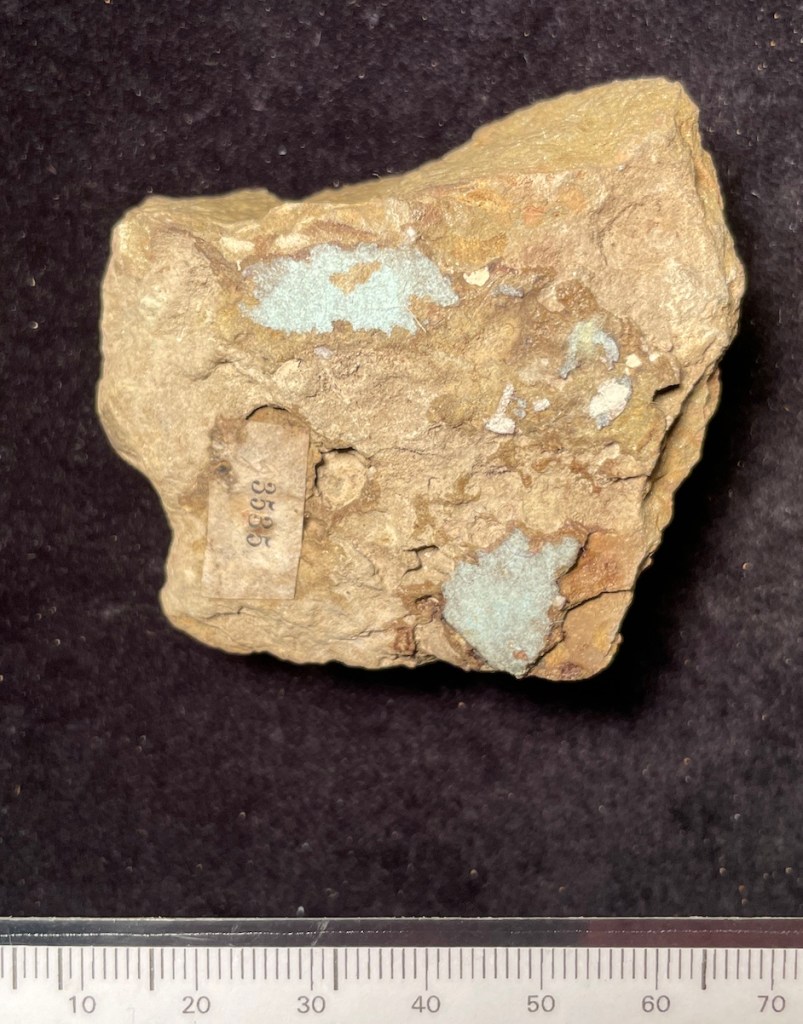
Labels and Localities
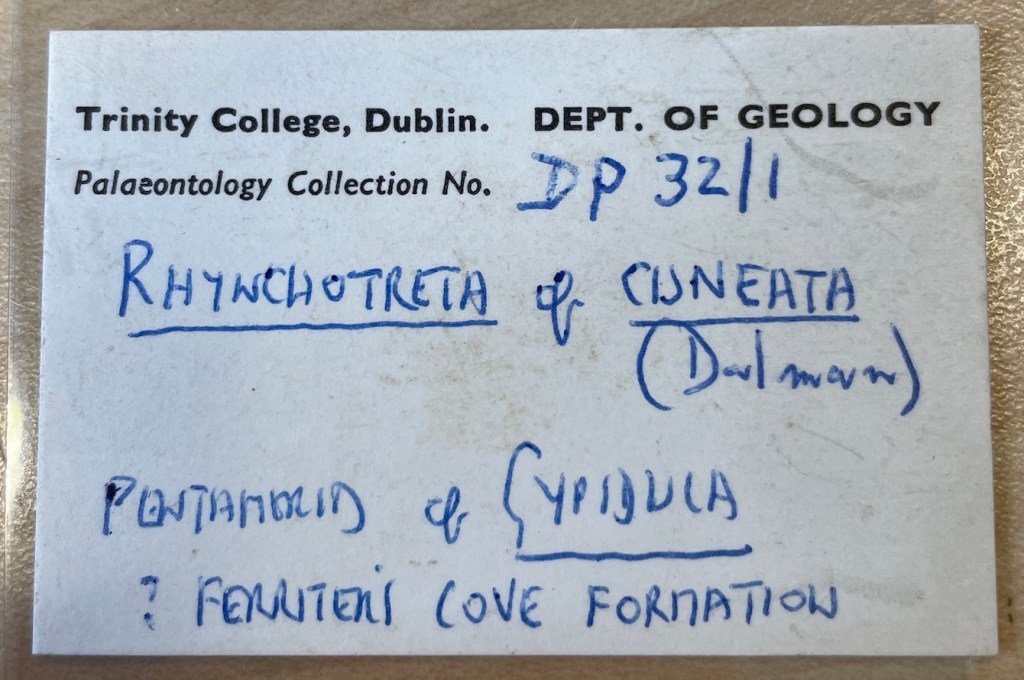
Some of the specimens are accompanied by labels written in C. H. Holland’s handwriting (sometimes a little hard to decipher), and many of the specimens have “DP” and/or “CHH DP” numbers stuck directly to the specimen.
However, the meaning of these numbers is lost. The connection between “CHH DP” and “DP” is not obvious – some specimens have both kinds of number. Neither number sequence appears to relate to the locality numbers listed in the Holland 1988 paper. However, it is likely that they do represent localities of some description, given that multiple specimens have the same number (e.g. DP 118 or DP 42). Those with an additional part, such as DP 32/1 above, may refer to a sub-locality or a particular collecting event at that locality.
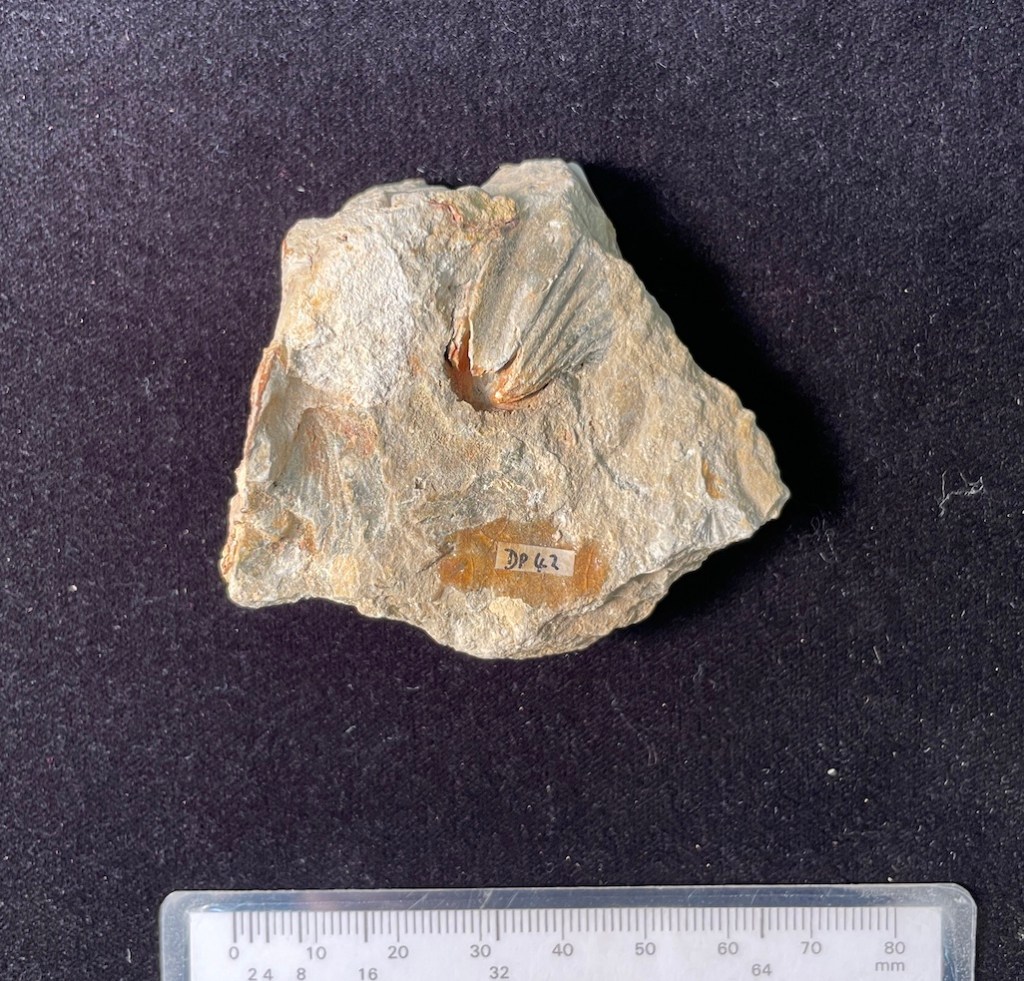
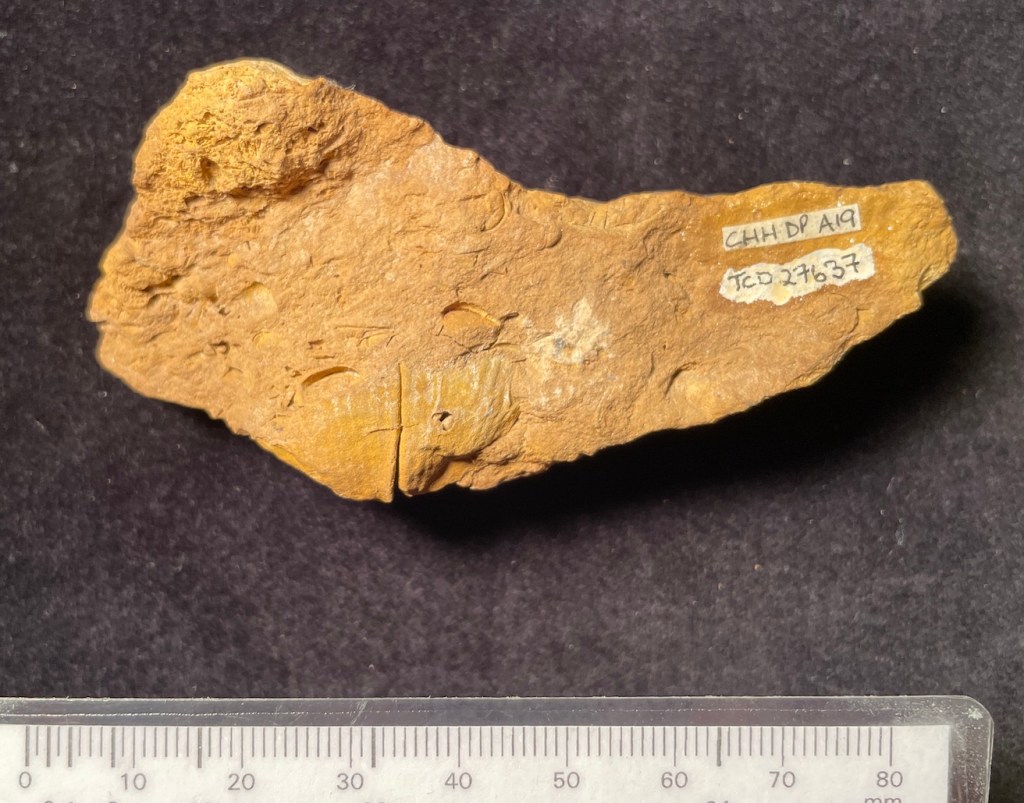
The specimens with Holland numbers can be searched by including identifiers issued by Holland: https://arctos.database.museum/search.cfm?guid_prefix=TCDGM%3APaleo&id_issuedby=Charles%20Hepworth%20Holland&coll_role=collector&any_geog=Kerry
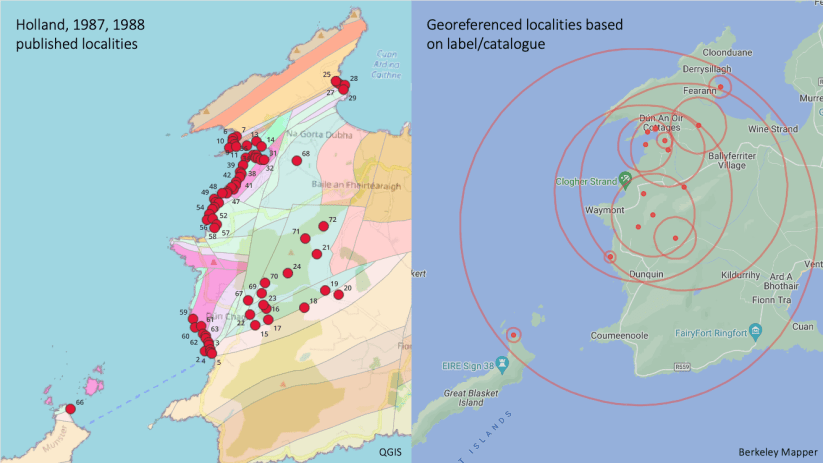
We hope to discover additional field notes that will reveal further information. Meantime, the collection has been georeferenced based on the data available. This means that localities have relatively large uncertainties – for example, if the only information available was “Drom Point Formation” which crops out across the peninsula.
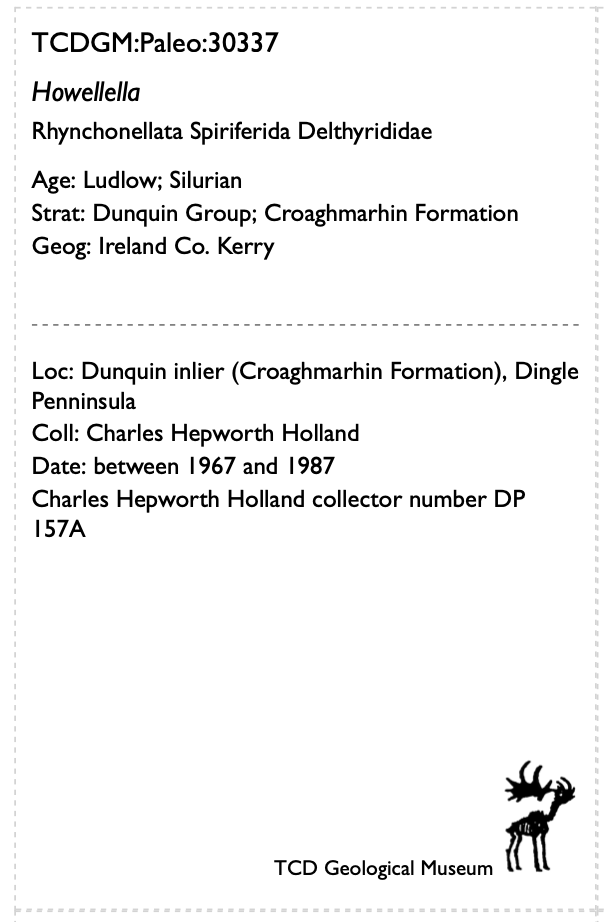
As part of the digitization process, new labels have been generated for this collection, directly from the database (right).
Documents
Other Resources
Higgs, K., & Williams, B. (2018). Geology of the Dingle Peninsula—A field guide. Geological Survey Ireland. https://www.gsi.ie/en-ie/publications/Pages/Geology-of-the-Dingle-Peninsula.aspx
 Geological Museum - Trinity College Dublin